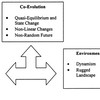
Supply networks are constantly changing. Perhaps not controlling, but letting things happen and letting supply networks emerge is the best management strategy?

Supply networks are constantly changing. Perhaps not controlling, but letting things happen and letting supply networks emerge is the best management strategy?
Conceptual in its approach and drawing from other areas of research, this chapter introduces four distinct groups of VENS, namely Constrained, Directed, Limited and Free VEN, and concludes that VEN risk management can and should learn from supply chain risk management.
Publish or perish? Publish. It has taken its time, but finally it is there, the book that has my chapter in it. This book links Virtual Enterprise Networks with Supply Chain Management and Risk Management in a cross-disciplinary fashion.
This blog has previously reported profusely on flexibility, let alone resilience and robustness, but has severely neglected agility. With this post, I intend to take a closer look at what it means to be agile. This is the only reference I have found that properly differentiates between agility and flexibility and what being agile actually entails.
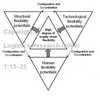
What fascinates me with this paper are (1) the parameters defining supply chain flexibility: Transparency, Simplicity, Responsiveness/Agility and Security/Reliability, and (2) flexibility potentials: Structural, Technological and Human flexibility potentials.
Conceptual in its approach and drawing from other areas of research, this paper introduces four distinct groups of VENS, namely Constrained, Directed, Limited and Free VEN, and concludes that VEN risk management can and should learn from supply chain risk management.
We need to consider how a supplier is embedded in its own networks if we are to truly gauge its performance.
What is comes down to is that virtual teams have six challenges: Distance, Time, Technology, Culture, Trust and Leadership. Jill Nemiro and her co-editors have put together a 764-page monster of a book. It’s not a handbook, it’s a handbrick.
This book describes six reasons why firms seek to establish cooperative networks: 1) Certainty 2) Flexibility 3) Capacity 4) Speed 5) Skills and Competence 6) Intelligence. Five degrees of networks can be discerned: 1) Equal-partner network 2) Unilateral agreements 3) Dominated network 4) Virtual corporation, and 5) Strategic alliance.

I must admit that I knew very little, if anything, about Virtual Enterprise Networks when I started this adventure some months back, but I can now say that I am fascinated by the concept

A VEN is a way for businesses to achieve virtual scale, enabling it to operate as if it possesses more resources and capacity than it actually has within its own physical organizations.

I am currently writing a book chapter for the book Managing Risk in Virtual Enterprise Networks: Implementing Supply Chain Principles, which is about risks in Virtual Enterprise Networks (VENs).