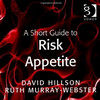
This book is clear and concise, to the point, and constantly switching between risk management in general, supply chain risk, and business continuity, always seeing the whole picture

This book is clear and concise, to the point, and constantly switching between risk management in general, supply chain risk, and business continuity, always seeing the whole picture
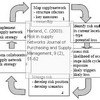
This paper is an excellent discourse on types of risk, sources of risks and descriptions of risk. Particularly, it relates risk to loss and consequences.
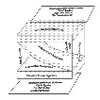
There are four situational factors that are important in supply chains, namely, the buyer, the supplier, the product bought, and the environment surrounding the purchase.
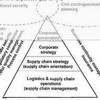
Is it possible to reconcile supply chain vulnerability, risk and supply chain management with corporate governance, business continuity, national security and emergency planning?

SecureSCM is an EU-funded research project aimed at finding secure computation protocols for collaborative Supply Chain Management. The project brings together researchers from mathematics, computer science, information systems and management to work together to solve this common problem.
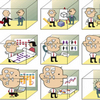
People are what makes organizations work, or in some cases, not work. What happens if you don’t have the right people? Well, you may have disaster waiting to happen from within.
Lean does not necessarily make you more vulnerable or less robust towards supply chain disruptions. Lean implies agile, and agile is what is needed to overcome supply chain disruptions.

Many management or supply chain related websites provide the same articles for free (or sometimes at a prenium). Formatting and graphics is usually stripped out, but the content is till there.
As a researcher within supply chain risk, I find the ISCRiM Newsletters a valuable source of information, particularily for academia-related news. The International Supply Chain Risk Management Network (ISCRiM) is a network of academians interested in how to handle different types of risks in the supply chain. The main purpose of the ISCRIM-network is to speed up, and improve, the research within “Supply Chain Risk Management”
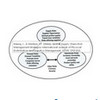
Three factors affect the selection of risk management strategies: temporal focus, supply chain flexibility and supply chain environment.
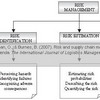
Albeit exploratory and conceptual in its approach, the article provides valuable insights into the current literature.
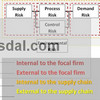
Christopher advocates establishing a supply chain risk profile, with the purpose to establish where the greatest vulnerabilities lie and where the “greatest” risks are, based on the view that risk is the product of probability and impact.

I must admit that I knew very little, if anything, about Virtual Enterprise Networks when I started this adventure some months back, but I can now say that I am fascinated by the concept

Good corporate governance requires that companies adopt a methodical approach to risk management, and the IRM Risk Management Standard provides the toolbox. The Institute of Risk Management (IRM) published a Risk Management Standard in 2002.
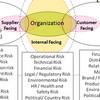
Did you know that the Supply Chain Council (SCS) has extended their renown SCOR-model to Supply Chain Risk Management? This presentation from the the SCS website will detail the changes to the SCOR model to account for Risk Management and how it integrates with the SCOR model risk enablers.

I am currently writing a book chapter for the book Managing Risk in Virtual Enterprise Networks: Implementing Supply Chain Principles, which is about risks in Virtual Enterprise Networks (VENs).
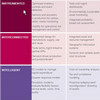
Instrumented, interconnected and intelligent. That is IBM’s vision of the supply chain of the future. The report features an interesting table, where these three characteristics are linked to SCM competencies and how they can be implemented.

Supply chain owners need to view their supply chain as a community, because supply chains are interconnected, and thus, magnify risk in multi-enterprise supply chains. Even if the manufacturing takes place out-house, product design should be kept in-house.
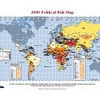
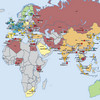
Global supply chains are increasingly becoming more vulnerable to potential disruption to trade. Every year, Aon publishes a political risk map, and in 2009 the number of countries tagged with ‘supply chain vulnerability’ has increased from 38 to 54.
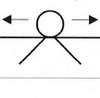
The perceived trust and the perceived dependence in business relationships influence the perceived vulnerability. The higher the perceived dependence, the higher the perceived vulnerability. The higher the perceived trust, the lower the perceived vulnerability.