Follow me

Jan Husdal's Supply Chain Expert Community profile Jan Husdal's LinkedIn profile Jan Husdal's Twitter profile Jan Husdal's Facebook profile Jan Husdal's BlogCatalog profile

Go To Page:12

All posts tagged
sparse transportation networks

2009/11/26 Leave a comment

INSTR 2010 - Call for papers

instr2010I can’t believe I haven’t mentioned this conference on my blog before., because the call has been out for while already. The 4th International Symposium on Transportation Network Reliability will be held at the University of Minnesota July 22-23, 2010. I have attended INSTR2004 and INSTR2007 and I’m certainly looking forward to INSTR2010.

» Read more » » »

2009/11/25 Leave a comment

Remote Logistics

remote-logistics Yesterday I was talking about emergency logistics, today it is remote logistics. The other day I came across a very interesting post on Logistics Planning for Projects in Remote environments, a post that highlighted the importance of planning ahead and preparing for the worst when undertaking a  development project in remote areas. Typically for such projects is that neither the logistics nor the infrastructure may be in place to the extent the project actually requires. The delivery of supply chain support for a project in a remote location has a number of challenges which need to be considered already at the planning stage. If these challenges are adressed, the projects stands a much higher chance of succeeding. So, what are these challenges?

» Read more » » »

2009/09/21 One comment

Bad locations - bad logistics?

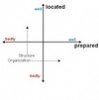
structure-organisation-supply-chainHow are companies located in sparse transport networks affected by supply chain disruptions? This article develops a new framework for the categorization of supply chains, and introduces the notion of the constrained supply chain. Within the constrained supply chain framework, a company can address its locational disadvantage by either redesigning the supply chain towards a better structure, in order to gain better location, or by redesigning the supply chain towards a better organization, in order to gain better preparedness.

» Read more » » »

2009/01/11 Leave a comment

Supply Chain Disruptions in Sparse Transportation Networks: Does Location Matter?

How are companies located in sparse transport networks affected by supply chain disruptions?

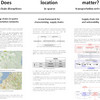
Below is a copy of the paper I presented at TRB2009, the Transportation Research Board 88th Annual Meeting, in Washington, DC, 11-15 January 2009. The paper was presented in a poster session and included as a full paper in the conference proceedings.  For your convenience, both the paper and the poster are included below.

» Read more » » »

2008/12/11 2 comments

Norwegian roads are slooooow...

In a previous post, a while I ago, I stated that Nowegian roads are dangerous…well, not only that, they are among the slowest in Europe, according to a newspaper article in Dagbladet. Comparing average speed on roads in 13 countries, it turns out that travelling in central Europe is several times much faster than in Norway.

» Read more » » »

2008/11/14 Leave a comment

TRB 2009 - are you going there, too?

Are you presenting at the TRB 2009, the Transportation Research Board Annual Meeting? Personally I consider presenting an article at TRB as only inches away from having an article published in an academic journal. The reason is that you have to submit a full paper, not just an abstract, which is then fully peer reviewed by at least three referees, thus ensuring the quality of the paper. Below is the abstract of a paper I will present at TRB2009, the Transportation Research Board 88th Annual Meeting, in Washington, DC, 11-15 January 2009.

» Read more » » »

2008/11/04 2 comments

Sparse transportation networks – a nightmare for supply chains

E6 Steinkjer, Norway

E6 - Steinkjer, Løsberga, Norway

Now it has happened again. Hardly a week goes by in Norway without a major supply chain disruption. Now the main (and practically only) highway beween the Northern and Southern part of Norway has been interrupted, prompting long detours on smaller roads. Not only that, the in fact only rail line between Trondheim and Bodø has been interrupted as well, a rail line that transports much of the goods between North and South Norway and is a major freight corridor. Normally, eight large freight trains pass every day. The irony is that this happened during construction work aimed at improving said road. In fact, this is the second time this year; in June the road and rail were closed for 12 days. This time, it’s looking like a couple of WEEKS!

» Read more » » »

2008/10/04 Leave a comment

Sparse transportation networks – overcoming locational disadvantage

Following up my previous post, Sparse transportation networks – a recipe for supply chain disruptions?, when it comes to a business’ physical location in relation to the functioning of the supply chain, obviously there are good locations and bad locations. Can a business’ organization compensate for that?

In The Severity of Supply Chain Disruptions: Design Characteristics and Mitigation Capabilities, Craighead et al. contend that the severity of supply chain disruptions are linked to a) the supply chain design characteristics and b) the supply chain mitigation capabilities. I like to look at it this way: the impact of supply chains disruptions depend on a) the structure and b) the organization of the supply chain, where the structure makes up the physical side (a) of the supply chain and the organization makes up the human side (b) of the supply chain. These two parts are complementary in that both are needed for the successful handling of a supply chain disruption, while at the same time, a deficiency in one part can be compensated by the strength of the other part, i.e. a badly structured supply chain can be strengthened by a well organized supply chain. How?

» Read more » » »

2008/09/19 Leave a comment

Sparse transportation networks - a recipe for supply chain disruptions?

The vulnerability of the transportation network as part of the supply chain is of particular interest in countries or regions with sparsely populated areas, and hence, a sparse transportation network. Typically traits of such regions are few transportation mode options and/or few transportation link options for each transportation mode, for example maybe only one railway line and two roads, no port, no airport. It should not come as a surprise then that the nature of sparse transportation networks, and thus sparse supply chains, makes them vulnerable to many different kinds of internal and external risks.

» Read more » » »

2008/08/24 6 comments

Norwegian roads are dangerous!

tk.no

Rv 70, Oppdølsstranda, Sunndal. From: tk.no

I just learned from the news this evening, while writing on a rather dull post for this blog, that a rockfall has hit one of major roads in this region, Rv 70 in Sunndal. Rockfall is not an unknown event in Norway, especially not in this region, where roads undulate precariously along high mountains, and where the only “escape” is a dive into freezing cold waters. The road in question has a long history of rockfalls and the incident has cut off the most direct route between the coastal city of Kristiansund and Eastern Norway, but fortunately a detour route is available. In Norway’s sparse transportation network that is not always the case, and closed roads mean additional travel costs not only to the ordinary traveller (i.e. tourist), but most importantly to businesses, who then have no alternative for shipping their goods to their customers, or receiving their goods from their suppliers.

» Read more » » »

2008/08/03 2 comments

Accessibility Index - a measure of Transport Network Vulnerability?

ResearchBlogging.orgI had the pleasure of meeting M.A.P. Taylor at the 3rd International Symposium on Transport Network Vulnerability (INSTR 2007). His research has many bearings towards my own research in that it is concerned with transport network vulnerability in sparse rural and remote networks. In his 2006 paper, Application of Accessibility Based Methods for Vulnerability Analysis of Strategic Road Networks, Taylor and his fellow contributors develop a methodology for assessing the socio-economic impacts of transport network degradation by using the change in accessibility prior to and after degradation of the road network as a measure for the importance or criticality of the road link.

» Read more » » »

2008/07/19 Leave a comment

Supply Chain Disruptions - Does location matter?

Ferry "Tresfjord" in stormy weather, Molde-Vestnes

In regions or countries with sparse transportation networks or few transportation mode choices the structure or design of the supply chain, along with the organization and preparedness become important factors in determining if a company has an favorable or a unfavorable location. In locations with a sparse transportation network there are maybe not so many options as to setting up the supply chain; the supply chain is in fact constrained by a certain physical location. Does this make it more susceptible to disruptions?

» Read more » » »

Go To Page:12