More than 400 papers out of thousands of documents were selected and narrowed down to 70 or so core papers, clearly showing the dominating trends within research into organisational resilience. What to read and what not to read?

More than 400 papers out of thousands of documents were selected and narrowed down to 70 or so core papers, clearly showing the dominating trends within research into organisational resilience. What to read and what not to read?

Oh dear…another earthquake in Christchurch, New Zealand, less than 6 months after the previous disaster, and this time perhaps even more devastating. One thing for sure, this community is having its disaster plans, business continuity measures and its resilience (and resolve) tested to the full

Christchurch, New Zealand, has been hit by an earthquake. How will the city recover? Will they be able to pull together the resources and quickly return to business as usual? I believe they will.
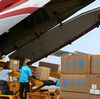
Only by combining military and humanitarian supply chains, the strengths of both types of logistics can be exploited, and the extreme agility of rescue organizations can be matched with the extreme efficiency of the military.
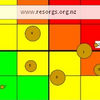
How many ways are there for defining vulnerability and criticality, really? Traditionally, risk matrixes have a likelihood/impact approach, but not always. Yesterday, I was examining a criticality/vulnerability matrix.

New Zealand is probably not the fist country that comes to mind when thinking of state-of-the-art transportation lifeline engineering. Nonetheless, I think it is time to consider New Zealand as being one of the countries at the very forefront.
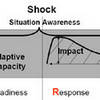
Readiness, Response and Recovery are four key elements in the New Zealand Civil Defence Emergency Management Act 2002. But how can this be related to supply chain management?

As our infrastructure and organisations become ever more networked and interdependent there is a growing need to focus on managing overall system risk. In particular, there is a need to focus not only on the vulnerability of our systems to failure, but also on our ability to manage and minimise the impact of any failures.