Featured posts
-
Published. Not perished.
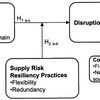
Publish or perish? Publish. It has taken its time, but finally it is there, the book that has my chapter in it. This book links Virtual Enterprise Networks with Supply Chain Management and Risk Management in a cross-disciplinary fashion. [ ... ]
-
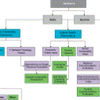
Supply Chain Risk Management in six steps
Supply management is not just about acquiring goods and services at the best possible price. It’s also about identifying possible disruptions to the supply chain and taking steps to mitigate them. [ ... ]
|
All posts tagged resilience
 2010/06/11  from the LITERATURE
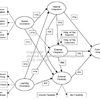
A severe supply chain disruption has hit my own blog: More than a month without a post. It’s not that there is so little to write about, it’s just that there is so little time to do it, which is why I’ve decided to reurn to a once weekly posing schedule. Nonetheless, what better occasion could there be to resume my posting than the discovery of an article proclaiming to provide a review of the state of the art in supply chain risk management? The literature review and conceptual framework developed by Hans-Christian Pfohl, Holger Köhler and David Thomas clearly identifies the main principles of SCRM and develops a framework and definitions for disturbance, disruption, security, resilience and risk. Supply chain risk management, so they say, is a process with evolutionary steps, involving no less than 17 underlying principles. Phew…
» Read more » » »
 2010/04/30  from the LITERATURE
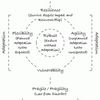
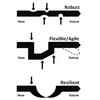
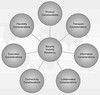
Resilience. That seems to be the buzzword these days. It seems to be making its way not only around the blogosphere, like on Ken Simpson’s blog, but also in the supply chain and logistics literature. In Ensuring supply chain resilience: Development of a conceptual framework, just out in the Journal of Business Logistics, Timothy J Pettit, Joseph Fiksel and Keely L Croxton develop a concept of supply chain resilience based on an extensive literature search and a focus group study. And quite frankly, this is one of the the better and most comprehensive frameworks for understanding resilience that I have seen, drawing on the quintessence of many years of supply chain risk research. Resilience, in essence, is bridging vulnerabilities by honing capabilities.
» Read more » » »
 2010/03/23  OTHER SITES and BLOGS
I’ve never given much though to webinars as a means of communication, as blogging is my force, although I do have a lecture on supply chain risk, but not in webinar style. Perhaps it’s time to reconsider. I just recently became aware of WTG Webinar, a website that caters to the business community and serves webinars by highly acclaimed speakers on management and supply chain issues, thus bringing the world of thought leadership and insider industry knowledge directly to your desktop. So, what’s in store at WTG Webinar?
» Read more » » »
 2010/03/01  from the LITERATURE
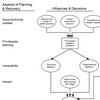
Can public-private partnerships improve community resilience? This question is posed in Leveraging public-private partnerships to improve community resilience in times of disaster, written in 2009 by Geoffrey Stewart, Ramesh Kolluru and Mark Smith, three researchers from the National Incident Management Systems and Advanced Technologies Institute (NIMSAT). The answer: In order to achieve community resilience public and private owners of critical infrastructures and key resources must work together, before, during and after a disaster.
» Read more » » »
The recent earthquake in Haiti is a poignant reminder of how vulnerable a country is when it is facing disaster on a grand scale. To me, it is a reminder that that while natural disasters are not man-made, the aftermaths and consequences of the disasters often are. Disasters like this call for resilience in all parts of the community, including the infrastructure, the supply chains and society as a whole. Some of the older posts on this blog , and which do not see daylight too often may shed some light on this.
» Read more » » »
|
Literature Reviews Sorted by last name of first author:
A | B | C | D | E | F | G | H | I | J | K | L | M | N | O | P | Q | R | S | T | U | V | W | X | Y | Z
|