Essentially, risk management is all about mitigation, whereas adaptation lays the groundwork for resilience. Risk management is only about preparedness, response, and recovery. By adding adaptation to those three we also add resilience.

Essentially, risk management is all about mitigation, whereas adaptation lays the groundwork for resilience. Risk management is only about preparedness, response, and recovery. By adding adaptation to those three we also add resilience.

What is risk, and how can it be expressed? Different international standards, such as the AS/NZS 3460 Risk Management Standard, the COSO ERM framework and the ISO 31000 Risk Management Standard do not provide adequate guidance for risk assessments and lack the necessary precision.
Theory is important in supply chain research, by helping us make sense out of chaos, but what is theory, what constitutes a valuable theoretical contribution and how can theoretical deliberations produce richer explanations and practical applications in supply chain research?
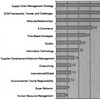
What has been written during a decade of academic research in the Supply Chain Management (SCM) field? A lot, obviously, but despite the considerable number of academic contributions, the literature is still very fragmented, and only examines one link of the chain, not the entire network.
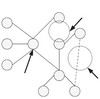
Supply chain disturbances and supply chain disruptions. Not the same and very different from each other. The former can be managed and solved within an established supply chain, the latter often requires establishing a new supply network. Understanding this difference is crucially important.
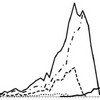
This is a well-researched and methodologically sound article, which brilliantly sums up the core topics and clusters of supply chain risk management of the past, the present, how they have developed since the early 1990s, and where SCRM may be headed to in the future. Maybe. Or maybe not.
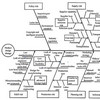
Supply Chain Risk Management has emerged as an important source of competitive advantage and an effective method of reducing vulnerability in a supply chain. One vulnerability or risk that is often overlooked are product design changes to an already existing manufacturing process.
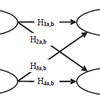
Obviously, selecting the right third-party logistics provider (3PL) for your supply chain is an important decision in supply chain risk management, but not every country decides in the same manner. While Americans focus on commitment, Germans appear to rely more on trust. Why is that?

Establishing the Northern Sea Route as an alternative shipping route to Suez and Cape of Good Hope could contribute to more flexible, agile and adaptable supply chains, because more route choices will result in a higher capacity, and may reduce chances for disruption and congestion.
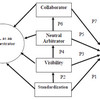
Historically, third-party logistics providers, or 3PLs, provided traditional logistics services, such as transportation and warehouse management, and nothing more than that, but 3PLs have evolved to becoming orchestrators of supply chains that create and sustain a competitive advantage.
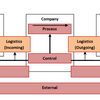
Outsourcing and relying on a third-party provider for logistics, or 3PL in short, can be quite a cost-saver, but is not without caveats. While there are significant benefits, there are also a number of challenges: current requirements, future growth, information exchange and security.
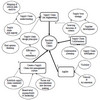
Frankly, if you are investigating how to make supply chains more resilient, and if you forget to mention this article in your literature review, then I would say that, obviously, you have absolutely no clue about supply chains or resilience.
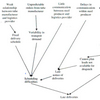
Supply chain flexibility is a decisive factor in avoiding supply chain disruptions. One major contributor to supply chain flexibility is the flexibility of the logistics provider, and a recent paper develops the construct of transport flexibility within the context of supply chain strategy.

Security concerns are an issue of importance in any supply chain. This paper presents the current state of initiatives in supply chain security management, and discusses their managerial implications, highlighting the importance of interplay between various business and governmental parties.
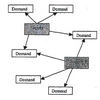
On one hand, a disaster relief operation could be viewed as a supply chain operating under an extreme supply chain disruption. On the other hand, a disaster relief operation could also be viewed as a supply chain operating with extreme supply chain flexibility or extreme supply chain agility.
This paper describes the performance of supply chains based on their elasticities of supply and demand. The model can be used to predict a supply chain’s ability to respond to supply interruptions, cost increases, and demand shifts, while also quantifying the degree to which it is prone to the bullwhip effect.
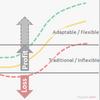
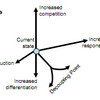
The norm in supply chain management is that variability is detrimental to performance as it causes cost in the form of stock-outs, poor capacity utilisation, and costly buffers. This paper questions this approach and argues that in the light of increasing turbulence a different approach to supply chain management is needed.
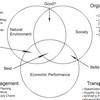
Sustainability has become a huge buzzword, both in today’s business world and within the broader facets of society. Sustainability has evolved from a perspective and investigation of standalone research in social and environmental areas, through a corporate social responsibility perspective, and towards a convergence of perspectives of sustainability as the triple bottom line.
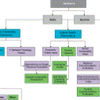
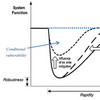
Resilience is related to three overarching concepts: 1) the vulnerability to unpredictable shocks, 2) the resources or wealth available to a system to help it change, and 3) the internal controllability of relationships in a system, i.e. its rigidity or flexibility.

What are the main change and trend drivers for international supply chains? How will future cross-border supply chains look like? In a study commissioned by the World Customs Organization in 2006, they sought to identify a set of foreseeable drivers of change and their predicted impact on global supply chain management for the next 20 years.