Frankly, if you are investigating how to make supply chains more resilient, and if you forget to mention this article in your literature review, then I would say that, obviously, you have absolutely no clue about supply chains or resilience.

Frankly, if you are investigating how to make supply chains more resilient, and if you forget to mention this article in your literature review, then I would say that, obviously, you have absolutely no clue about supply chains or resilience.
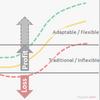
The norm in supply chain management is that variability is detrimental to performance as it causes cost in the form of stock-outs, poor capacity utilisation, and costly buffers. This paper questions this approach and argues that in the light of increasing turbulence a different approach to supply chain management is needed.
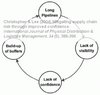
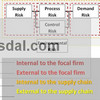
Traditionally, papers on supply chain risk use the “classic” supply-demand-internal-external scheme for classifying supply supply chain risk sources. Christopher and Lee do not. They see risk as primarily related to uncertainty, volatility and turbulence
What is in the supply chain is determined by a design process, and consequently, is it possible to design supply chain risk out of (or in to) the supply chain?
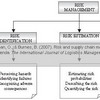
Risk management needs to address both sides of the risk: what lies behind the risk (source) and what lies in front of it (consequences).
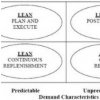
Opposites attract and in the supply chain world, “lean” and “agile” appear to be opposites. Both management strategies have their advantages and disadvantages.
Albeit exploratory and conceptual in its approach, the article provides valuable insights into the current literature.
Christopher advocates establishing a supply chain risk profile, with the purpose to establish where the greatest vulnerabilities lie and where the “greatest” risks are, based on the view that risk is the product of probability and impact.
When Manuj and Mentzer (2008) wrote their article titled Global Supply Chain Risk Management, they used Ghoshal (1987) Global Strategy: An Organizing Framework for developing sources of risk and Jüttner, Peck and Christopher (2003) Supply Chain Risk Management: Outlining an Agenda for Future Research for developing risk mitigation strategies.
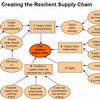
What is supply chain risk? Today I will take a closer look at the chapter titled “Managing risk in the supply chain” in Logistics & Supply Chain Management by Christopher Martin.
Responsiveness, reliability and relationships are the basis for successful logistics and supply chain management. Strategies like Just-In-Time (JIT), Lean and Agile thinking are reviewed, and last not least, there is a chapter on supply chain risk.

Martin Christopher’s particular research interests lie at the interface between marketing and logistics reflecting his belief that these two critical activities underpin superior supply chain performance.

Supply chain vulnerability is an important business issue, but little research has been undertaken into supply chain vulnerabilities. Recently I came across a report on Supply Chain Vulnerability published as early as 2002 by the Cranfield University.