Featured posts

  • Published. Not perished. Managing Risk in Virtual Enterprise Networks

    Publish or perish? Publish. It has taken its time, but finally it is there, the book that has my chapter in it. This book links Virtual Enterprise Networks with Supply Chain Management and Risk Management in a cross-disciplinary fashion. [ ... ]

  • Supply Chain Risk Management in six steps kiser-risk-management-six-steps

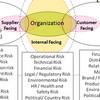
    Supply management is not just about acquiring goods and services at the best possible price. It’s also about identifying possible disruptions to the supply chain and taking steps to mitigate them. [ ... ]

12

All posts tagged
least cost path

2002/04/03 my own RESEARCH No reactions yet

Shortest Path Computation: A Comparative Analysis

Current research work into establishing a performance efficiency hierarchy between Java, C++ and ArcView is described and experimentation is performed in order to statistically compare shortest path query execution time, response time and implementation issues.

» Read more » » »

2001/05/12 my own RESEARCH No reactions yet

MFworks Tutorial

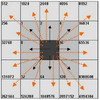
MFworks has evolved from MAPFactory, originally designed by C. Dana Tomlin, the father of map algebra.  Conducting network analysis in MFworks comprises iterative steps that lead to a functioning network. These steps will convert map layers with square cells into linear elements that are linked together as lines, with directional flows assigned to each cell, and map layers containing cost variables. This tutorial, developed by husdal.com in 2002, is a showcase on network analysis in MFworks, with step by step instructions and a summary of the theory behind it.

» Read more » » »

2001/04/25 from the LITERATURE No reactions yet

Corridor Analysis - A timeline of evolutionary development

Locating a right-of-way for a linear facility such as a pipeline, a transmission line, a railway or a roadway can be a complex problem. Locating a corridor connecting an origin and a destination on a landscape is analogous to identifying a route that traverses a continuous landscape. Thus, corridor analysis is closely linked to shortest-path finding and network analysis in raster GIS, and has evolved along with it. Corridor analysis is essentially a variant of surface analysis, but can also be viewed as a site selection problem where an optimal contiguous and elongated site is sought.

» Read more » » »

2000/09/01 my own RESEARCH 2 reactions

How to make a straight line square

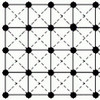
Euler’s famous “Königsberg bridge” question, dating back as far as 1736, is often seen as the starting point of modern path finding – was it possible to find a path through the city of Königsberg crossing each of its seven bridges once and only once and then returning to the origin? Euler’s methods formed the basis of what is known as graph theory, and which in turn paved the way for path finding algorithms. Traditionally, network analysis, path finding and route planning have been the domain of graph theory and vector GIS, which is where most algorithms find their application. Contrary to such common wisdom, the research of this thesis for the Msc in GIS explores the topic of network analysis in raster GIS, using MFworks as example software. Current algorithms, procedures and network modelling techniques are investigated and common artefacts are explained.

» Read more » » »

2000/06/25 my PUBLIC PRESENCE 2 reactions

Fastest path problems in dynamic transportation networks

This research essay and literature review investigates some of the gateways to path finding in static and dynamic networks that are listed in present research literature. A selected set of different approaches are highlighted and set in a broader context, illustrating the various aspects of path finding in static and dynamic networks. It is shown that the A* algorithm is the dominant algorithm for solving fastest path problems. A further attempt is made to draw attention to the advances that have been made in path finding in the field of robotics, in order to establish a lateral relation that can form the basis of further exploration and fruitful merger of the two research fields.

» Read more » » »

12