Frankly, if you are investigating how to make supply chains more resilient, and if you forget to mention this article in your literature review, then I would say that, obviously, you have absolutely no clue about supply chains or resilience.

Frankly, if you are investigating how to make supply chains more resilient, and if you forget to mention this article in your literature review, then I would say that, obviously, you have absolutely no clue about supply chains or resilience.
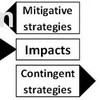
Risk management needs to address both sides of the risk: what lies behind the risk (source) and what lies in front of it (consequences).
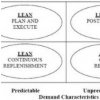
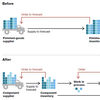
Opposites attract and in the supply chain world, “lean” and “agile” appear to be opposites. Both management strategies have their advantages and disadvantages.
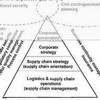
Is it possible to reconcile supply chain vulnerability, risk and supply chain management with corporate governance, business continuity, national security and emergency planning?
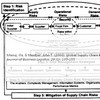
When Manuj and Mentzer (2008) wrote their article titled Global Supply Chain Risk Management, they used Ghoshal (1987) Global Strategy: An Organizing Framework for developing sources of risk and Jüttner, Peck and Christopher (2003) Supply Chain Risk Management: Outlining an Agenda for Future Research for developing risk mitigation strategies.

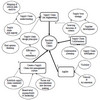
In her article Drivers of supply chain vulnerability: an integrated framework, Helen Peck identifies four drivers of supply chain vulnerability:Value stream, product or processes,Assets and infrastructure dependencies,Organizations and inter-organizational networks,The Environment.

Supply chain vulnerability is an important business issue, but little research has been undertaken into supply chain vulnerabilities. Recently I came across a report on Supply Chain Vulnerability published as early as 2002 by the Cranfield University.