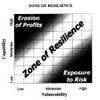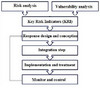
This paper develops a new conceptual model that brings SC in more direct contact with RM, by incorporating vulnerability to develop the key risk indicators,thus linking potential risk with actual risk.

This paper develops a new conceptual model that brings SC in more direct contact with RM, by incorporating vulnerability to develop the key risk indicators,thus linking potential risk with actual risk.
What is supply chain risk really? In this paper, existing approaches for quantitative supply chain risk management are reviewed by setting the focus on the definition of supply chain risk and related concepts.
The Global Risk Report 2015 highlights and reflects upon a wide range of cross-cutting challenges that can threaten social stability. These risks are additionally aggravated by the global economic crisis and persistent unemployment.Things have not improved since the inception of the Global Risk Reports in 2005, they have in fact turned worse. Local risks have now gone global.

This report, produced in collaboration with Accenture, calls for new models to address supply chain and transport risks. It highlights the urgent need to review risk management practices to keep pace with rapidly changing contingencies facing the supply chain, transport, aviation and travel sectors.
This is the 2011 version of my annual lecture on Supply Chain Risk, and essentially, it is a selection of the more than 400 articles, books and book chapters I have in my office shelves, and in a way it is a broad literature review of anything connected to supply chain risk.

In September and October 2009 the Economist surveyed 500 executives with responsibility for risk management, and selected from companies across Asia-Pacific, North America and Europe, in order to understand how companies are being affected by supply-chain risk, and how they are responding to it.
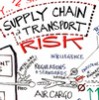
In our quest for greater efficiency and greater choice, are we really developing robust global transport networks or simply building a house of cards? That is what the Supply Chain and Transport Risk Initiative, nested within the Risk Response Network of the World Economic Forum is trying to answer.
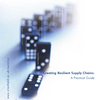
Creating Resilient Supply Chains: A Practical Guide, published by the University of Cranfield in 2003, almost a decade ago, is now perhaps the standard reference for research in risk, vulnerability and resilience in supply chains, and it belongs in every literature review on those subjects.
2010 provided me with a couple of new insights and the lecture is meant to highlight some of the current literature on supply chain risk and to suggest further reading materials. You will not know everything there is to know about supply chain risk after the lecture, but you will know where to find it.

How the toy industry handles supply chain risk is applicable to many other industries as well. While few of the risks faced by toy makers are unique to the industry, the combination of risks is daunting.

An empirical analysis of supply chain risk management in the German automotive industry shows that the group using reactive supply chain risk management seems to do better in terms of disruptions resilience or the reduction of the bullwhip effect, whereas the group pursuing preventive supply chain risk management seems to do better as to flexibility or safety stocks.

What are the most common supply chain and logistics risks in Germany? What risks does the logistics industry perceive? This study separates business risks from logistics providers risk, that is a novel approach, and this is perhaps the most complete overview of supply chain and logistics risks I have seen to date.
This is not so much a book about risk management in logistics, but more a book about resilience management in logistics, where the authors develop a brilliant framework for how to improve a company’s resilience.
This definition of supply risk views the supply chain from end to end, acknowledging that what you purchase as a supply, in the the end will wind up in some customer’s hand, to which you may be liable, if your product or service is faulty
Set up by Zurich Insurance, the website is aimed at helping senior managers and directors in finance, supply chain, operations and risk develop a deeper understanding of the tactical considerations and strategic approaches to minimize impacts of disruptions to the supply chain.
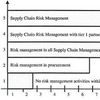
Supply chain risk management is a process with 5 evolutionary steps, involving no less than 17 underlying principles. The conceptual framework developed in this article clearly identifies the main principles of SCRM and develops a framework and definitions for disturbance, disruption, security, resilience and risk.
Conceptual in its approach and drawing from other areas of research, this chapter introduces four distinct groups of VENS, namely Constrained, Directed, Limited and Free VEN, and concludes that VEN risk management can and should learn from supply chain risk management.

This is the 3rd day with severe transportation and thus supply chain disruptions all over Europe, due to the volcanic ash clod from Iceland, forcing travellers, cargo shippers and logistics providers to seek alternative solutions. In essence this is a very practical lesson in business continuity.
Supply chain integrity must encompass both operational and reputational dimensions. Companies must invest in enhancing the integrity of their supply chains, in a manner which balances operational objectives with reputational risks.
I do have a lecture on supply chain risk, but not in webinar style. Perhaps it’s time to reconsider.