Featured posts
-
Published. Not perished.
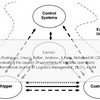
Publish or perish? Publish. It has taken its time, but finally it is there, the book that has my chapter in it. This book links Virtual Enterprise Networks with Supply Chain Management and Risk Management in a cross-disciplinary fashion. [ ... ]
-
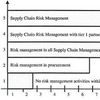
Supply Chain Risk Management in six steps
Supply management is not just about acquiring goods and services at the best possible price. It’s also about identifying possible disruptions to the supply chain and taking steps to mitigate them. [ ... ]
|
All posts in from the LITERATURE
 2010/03/10  from the LITERATURE
A promising title with promising content? Perhaps. If you are a supply chain or logistics professional, looking for a paper that discusses the intricacies of managing a supply chain in a disaster area, how to prepare and how to recover, this is NOT it. However, if you are a supply chain or logistics academic or researcher, looking for a new research strand or looking for a new theoretical approach to preparedness and recovery, then yes, this is it. The supply chain crisis and disaster pyramid by R. Glenn Richey Jr is a paper that falls in the category of academically intriguing, but practically maybe not so. That said, it may very well be a future seminal paper in supply chain disaster preparedness and recovery.
» Read more » » »
 2010/03/08  from the LITERATURE
Can contingency planning increase flexibility and minimize risk exposure to supply chain disruptions? Obviously yes, but what is it about the contingency planning process that relates to flexibility? That question is asked by Joseph B Skipper and Joe B Hanna in Minimizing supply chain disruption risk through enhanced flexibility. Surprisingly, this article suggests that only very few variables of contingency planning are positively related to flexibility…puzzling, isn’t it?
» Read more » » »
 2010/03/05  from the LITERATURE
How do you prepare a supply chain for a crisis, and how do you manage a supply chain when the unexpected hits you? While not providing a direct answer to this question, a group of researchers from the Texas A&M University, has scoured some 118 peer-reviewed and published articles and come up a classification scheme I think is excellent. In Managing supply chains in times of crisis: a review of literature and insights, the three, Arunachalam Narayanan, Ismail Capar and Malini Natarajarathinam use 5 factors and 15 subfactors to separate the chaff from the wheat.
» Read more » » »
 2010/03/03  from the LITERATURE
My latest acquaintance in supply chain risk research methodology is developing drivers and dependants using interpretive structural modelling (ISM). A good example was provided by the trio of Mohd Nishat Faisal, D.K. Banwet, and Ravi Shankar, which I presented last week when I reviewed their paper on information risks management. As I found out, they used ISM in a previous paper written a year earlier, looking specifically (or perhaps more generally) at enablers of supply chain risk mitigation. Again, a fascinating article…
» Read more » » »
 2010/03/01  from the LITERATURE
Can public-private partnerships improve community resilience? This question is posed in Leveraging public-private partnerships to improve community resilience in times of disaster, written in 2009 by Geoffrey Stewart, Ramesh Kolluru and Mark Smith, three researchers from the National Incident Management Systems and Advanced Technologies Institute (NIMSAT). The answer: In order to achieve community resilience public and private owners of critical infrastructures and key resources must work together, before, during and after a disaster.
» Read more » » »
|
Literature Reviews Sorted by last name of first author:
A | B | C | D | E | F | G | H | I | J | K | L | M | N | O | P | Q | R | S | T | U | V | W | X | Y | Z
|