Why is it that we fear so much? Frank Furedi shows how the notion of all kinds of vulnerability and possibilistic (worst likely) risk thinking has dethroned probabilistic (most likely) risk thinking.

Posts inspired by academic articles I have read
Why is it that we fear so much? Frank Furedi shows how the notion of all kinds of vulnerability and possibilistic (worst likely) risk thinking has dethroned probabilistic (most likely) risk thinking.
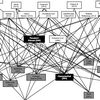
What are the Top of the Pops of Supply Chain Resilience papers? Here is a list of the eight most cited papers. Six of these have been reviewed on this blog, so I’ve done my homework well so to speak.
Capability is an important measure in adressing vulnerabilities and in assessing resilience. Is there a way to quantitatively describe what capability entails?
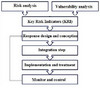
This paper develops a new conceptual model that brings SC in more direct contact with RM, by incorporating vulnerability to develop the key risk indicators,thus linking potential risk with actual risk.
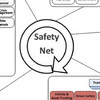
Supply chain security appears to be overlooked in supply chain risk management. However, supply chain security can add to the robustness and resileince of the overall supply chain, providing a “safety net” of services that protects and enhances the overall supply chain operation.

Transport resilience has 10 dimensions, says Pamela Murray-Tuite. What are these 10 dimensions and how can they help us understand transport network resilience? And what about Godschalk?
Seven distinctive research factors along with the key references within those will provide researchers with ample options for hypotheses for future work. This is a paper well-worth considering if plan on doing any research within supply chain risk management.
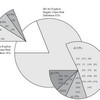
What is supply chain risk really? In this paper, existing approaches for quantitative supply chain risk management are reviewed by setting the focus on the definition of supply chain risk and related concepts.
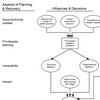
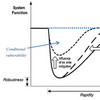
The resilience of any system can be measured by two dimensions: robustness, the extent of system function that is maintained, and rapidity, the time required to return to full system operations and productivity. In essence, pre-disaster mitigation fosters robustness, and post-disaster adaptation fosters rapidity.
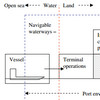
Maritime transport is a vital backbone of today’s global and complex supply chains. Unfortunately, the specific vulnerability of maritime supply chains has not been widely researched. Perhaps because it is such an obvious part of today’s supply chains that it is not looked at specifically, and just assumed to be part of the wider picture.
More than 400 papers out of thousands of documents were selected and narrowed down to 70 or so core papers, clearly showing the dominating trends within research into organisational resilience. What to read and what not to read?
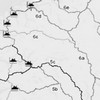
Norwegian politicians invest more money in roads in regions overrepresented in the Parliament because the expected political return is higher. And that is why Norwegian roads always have been, currently are and forever will be, a patchwork of high-standard and sub-standard roads.
Essentially, risk management is all about mitigation, whereas adaptation lays the groundwork for resilience. Risk management is only about preparedness, response, and recovery. By adding adaptation to those three we also add resilience.
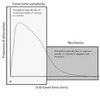
While carriers focus on the immediate and short-term impact and how to solve the situation, .i.e how to deliver on time if still possible, shippers focus more on the strategic and long-term impact and on how to avoid the situation, i.e. how to prevent this from happening again.
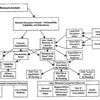
This paper presents a comprehensive review of the scholarly literature related to the field of network-disruption analysis. A number of methods have attempted to deal with the problem of isolating links in different ways, but none has been ubiquitously successful. Why is that so?
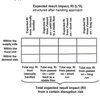
Here is a new model that links disruption risk to disruption source, that covers all flow-related disruption risks in the total supply chain from natural resources to delivered final product, and that is seen from the angle of an individual focal unit in the supply chain.
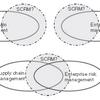
Supply Chain Risk Management is a area that has seen a significant growth in recent years. However, there is diverse perception of research in supply chain risk because these researchers have approached this area from different domains, thus creating three distinct research gaps.
What is risk, and how can it be expressed? Different international standards, such as the AS/NZS 3460 Risk Management Standard, the COSO ERM framework and the ISO 31000 Risk Management Standard do not provide adequate guidance for risk assessments and lack the necessary precision.

Are business schools bad for business? Are they to blame for the demise in good management practices because they have become obsessed with teaching maximizing shareholder value at the expense of everything else? Perhaps they are. If so, is there a way out?
Theory is important in supply chain research, by helping us make sense out of chaos, but what is theory, what constitutes a valuable theoretical contribution and how can theoretical deliberations produce richer explanations and practical applications in supply chain research?