Follow me

Jan Husdal's Supply Chain Expert Community profile Jan Husdal's LinkedIn profile Jan Husdal's Twitter profile Jan Husdal's Facebook profile

if
Go To Page:12»

All posts in
GIS/GPS

2007/12/31 Leave a comment

Do you know where your truck fleet is right now? No? You should.

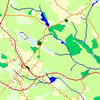
Vehicle routing and tracking has taken a giant leap forward Since I first wrote about in 1999 in my article on Road Transportation Management using GIS. Back then the use of GPS was still in it’s infancy, and very few if any companies were actively using it. These days GPS technology  such as the GPS Insight vehicle tracking system, one of many such tools, can not only pinpoint any vehicle’s exact location, it can also transfer a wealth of detailed information about each vehicle.

» Read more » » »

2005/03/05 Leave a comment

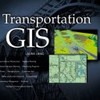
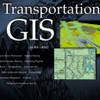
Book Review: Transportation GIS

This book showcases many examples of how GIS can be applied in the field of transportation using ArcView GIS, but it doesn’t come with any theory. As such, Transportation GIS more like an overpriced ESRI sales brochure and not a textbook. Nevertheless, the examples are really neat and should inspire any practitioner in the field.

» Read more » » »

2003/08/25 Leave a comment

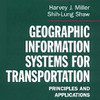
Book review: Geographic Information Systems for Transportation

Having been a student with Harvey Miller at the University of Utah 200o-2002 probably makes my review somewhat biased. Nevertheless, Geographic Information Systems for Transportation: Principles and Applications (Spatial Information Systems) written by Harvey Miller and Shih Lung shaw is an excellent book if you’re a student or professional in the field of GIS and need to know how GIS can be applied to transportation, or vice versa, knowing transportation, this book will tell you what GIS can do for you.

» Read more » » »

2002/12/05 4 comments

ArcView Network Analyst Tutorial

The ArcView Network Analyst (AVNA) extension module allows the user to solve 3 categories of network analysis problems; Find Best Route, Find Closest Facility and Find Service Area. Find Best Route problems involve finding the “least cost impedance” path on the network between two or more stops. Find Closest Facility pertains to finding the distances from an event to the nearest facilities, or vice versa, finding the distance from a facility to one or more events. Find Service Area determines the area that a particular facility can serve within a given time or cost frame.

» Read more » » »

2002/04/04 Leave a comment

JavalancheTM - analyzing hazards to roads

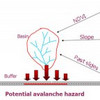
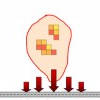
Traditionally, in studying the effect of hazards on roads, a hazard map is prepared based on the hazard in question, the contributing factors and then overlaid with a road map. If the road or a buffer around its vicinity intersects hazard areas, these areas constitute a potential threat.

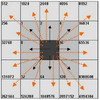
In the approach used in this procedure, imagine traveling along the road and looking to either side for hazards. The neighborhood that needs to be examined is dependent on the hazard and its contributing factors. This neighborhood search then produces a hazard map that is directly related to the road.

» Read more » » »

2002/04/03 Leave a comment

Shortest Path Computation: A Comparative Analysis

Current research work into establishing a performance efficiency hierarchy between Java, C++ and ArcView is described and experimentation is performed in order to statistically compare shortest path query execution time, response time and implementation issues.

» Read more » » »

2002/03/22 Leave a comment

A spatial framework for modeling hazards to transportation lifelines

The primary hazards included in this study are avalanches, landslides, flooding, earthquakes, wildfires, and rockfall. Although the primary focus of this research is roads, it is equally applicable to other transportation lifelines, such as railways, canals/waterways, or transmission lines for power, gas or oil. This presentation provides an overview of the spatial framework, current results and limitations, and directions for further research. MFworks was used as a GIS tool, along with a self-developed Java application.

» Read more » » »

2001/10/31 Leave a comment

Can it really be that dangerous? Issues in visualization of risk and vulnerability

Risk analysis tends to be a highly mathematically, statistically, and let alone probabilistically oriented science. Risk maps derived from risk analysis often portray only one possible scenario and do not leave much room for personal interpretation. Data on risks and hazards often tend to be heterogeneous, complex, inter-dependent, not directly comparable, and correlated in ways that are not immediately apparent. Visualization technology has emerged as a form of exploratory cartography, which can help explain, analyze and communicate risk. Because the risk analyst and the public in general may differ on what constitutes a risk or what not, visualization techniques can help the risk assessor better understand underlying factors and generate better risk maps, thus communicating a clearer message to the public. Examples of how risk should be communicated are presented and discussed along with current visualizations.

» Read more » » »

2001/05/12 Leave a comment

MFworks Tutorial

MFworks has evolved from MAPFactory, originally designed by C. Dana Tomlin, the father of map algebra.  Conducting network analysis in MFworks comprises iterative steps that lead to a functioning network. These steps will convert map layers with square cells into linear elements that are linked together as lines, with directional flows assigned to each cell, and map layers containing cost variables. This tutorial, developed by husdal.com in 2002, is a showcase on network analysis in MFworks, with step by step instructions and a summary of the theory behind it.

» Read more » » »

2001/04/25 Leave a comment

Corridor Analysis - A timeline of evolutionary development

ResearchBlogging.orgLocating a right-of-way for a linear facility such as a pipeline, a transmission line, a railway or a roadway can be a complex problem. Locating a corridor connecting an origin and a destination on a landscape is analogous to identifying a route that traverses a continuous landscape. Thus, corridor analysis is closely linked to shortest-path finding and network analysis in raster GIS, and has evolved along with it. Corridor analysis is essentially a variant of surface analysis, but can also be viewed as a site selection problem where an optimal contiguous and elongated site is sought.

» Read more » » »

2001/02/01 Comments are closed

The use of air photos in emergency management

There are a surprisingly large number of applications of air photos in emergency management. These range, among others, from pre-disaster mitigation planning through damage surveys to evacuation studies. Air photos can capture a lot more information than field surveys can, and can assist in a number of situations. Air photos are a tool which should not be left out in any form of emergency management.

» Read more » » »

2000/09/01 2 comments

How to make a straight line square

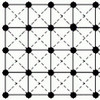
Euler’s famous “Königsberg bridge” question, dating back as far as 1736, is often seen as the starting point of modern path finding – was it possible to find a path through the city of Königsberg crossing each of its seven bridges once and only once and then returning to the origin? Euler’s methods formed the basis of what is known as graph theory, and which in turn paved the way for path finding algorithms. Traditionally, network analysis, path finding and route planning have been the domain of graph theory and vector GIS, which is where most algorithms find their application.

Contrary to such common wisdom, the research of this thesis for the Msc in GIS explores the topic of network analysis in raster GIS, using MFworks as example software. Current algorithms, procedures and network modelling techniques are investigated and common artefacts are explained.

» Read more » » »

Go To Page:12»