Risk Appetite versus Risk Attitude has brought a whole new perspective on risk and risk management to my attention: How much risk do we want to take? That is risk appetite. How much risk do we think we should take? That is risk attitude

Posts inspired by books I have read
Risk Appetite versus Risk Attitude has brought a whole new perspective on risk and risk management to my attention: How much risk do we want to take? That is risk appetite. How much risk do we think we should take? That is risk attitude
Resilience. It is not so much about reducing the number of things that go wrong, but it is about improving the number of things that go right. Resilience Engineering rests on responding, monitoring, anticipating and learning. In that order.
This book is a must-have for any serious student or budding research. The book emphasises that research is based on structure and logic. The book teaches by example how to do research. I think that is what makes this such a brilliant book to have and read and put to use.
Many global supply chains benefit from the operational flexibility and distribution efficiencies provided by logistics clusters, yet we have a relatively poor understanding of these vital nodes. This lack of knowledge is even more pronounced when the broader economic benefits are considered.
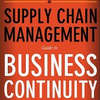
As far as I can see, this is the first book that explains in detail why and how business continuity thinking should be part of supply chain management. It successfully marries Business Continuity Management with Supply Chain Management, thus creating Supply Chain Continuity Management.
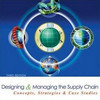
More than 500-page heavy and laden with examples, this book takes on a unique approach, and teaches you how the supply chain is an integrated part of any business, not something added to it to make the business work. The supply chain is the business; without it, there would be no business.
What does it mean to be a resilient organization? Blending academic research and managerial insights this book provides a different look at resilience, where resilience is more than just the ability to meet adversity; resilience is an essential element of a company’s competitive advantage.
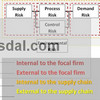
In this book, which is a more or less unabridged version of his dissertation, Holger Köhler not only presents a (new) system for the systematization of supply chain risks, he also develops a model for the factors that influence supplier risk and brings it together in a novel way that I haven’t seen before.
Small and medium-sized enterprises (SMEs) make up the majority of enterprises in most countries, and thus often play a considerable role in supply chains, yet they often lag behind in implementing effective risk management practices, which are essential to their survival and their business continuity.
This a book for companies wishing to survive into the future, simply because developing effective protection against exposure to ‘ethical risk’ is the only possible way forward, as corporate social responsibility is growing in importance. Not the only possible way, but the only viable way.
This is a fascinating book, showing how easy it may be for employees, customers, clients and consultants to commit fraud, and how easy it may be for management to detect and to prevent this. It is a book I highly recommend for anyone working in procurement or supply chain management.
Every firm with a supply chain that sources globally or operates internationally is exposed to political risks that may be very different from what they are used to domestically. On the international scene such risk can occur suddenly and without warning, not because they cannot be foreseen, but because the firm usually lacks the tools and the knowledge it needs to anticipate and react coherently to political risks.
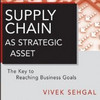
The supply chain is a firm’s core asset, and perhaps its most important asset, and a firm is only as good or as bad as its supply chain. In this tightly packed 300-page volume Sehgal shows how important it is to have a top-down-driven approach to supply chain management and how important it is to link strategy and execution, from the board room to the very last delivery guy.
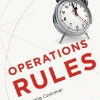
This book is about the principles, frameworks and processes that enable the aligning of a company’s specific customer value proposition with its operations strategy.The book is built around 33 rules that cover all possible aspects of supply chain operations and management, and that are placed throughout the eleven chapters of the book.
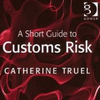
For businesses, failing to comply with customs requirements may result in delayed shipments and serious disruptions in the supply chain. That is why managing customs risk is an integral part of managing global supply chain risks, but customs risks are unfortunately absent from much of the supply chain risk literature.
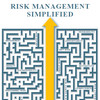
Risk management. Why make it difficult when you can make it easy? This is a handbook and a self-assessment tool that leaves practically no risk uncovered. It’s practical, to the point, not academic at all, and easy to work with. It is perhaps the most hands-on tool around.

This book describes how difficult it is to build a reputation, and how easy it is to destroy, how it can be measured, how it can be managed, what drives it and how different stakeholders focus on different aspects of reputation, and how reputation (risk) management is an integral part of risk management in general.
Not only will this book help procurement professionals to lift their head from their desks and gain a wider perspective on possible ramifications of their purchasing decisions, it will also help top managers to seeing procurement as a crucial contributor to a company’s well-being and competitive advantage.

What are the most common supply chain and logistics risks in Germany? What risks does the logistics industry perceive? This study separates business risks from logistics providers risk, that is a novel approach, and this is perhaps the most complete overview of supply chain and logistics risks I have seen to date.

Resilience is what distinguishes those who fail from those who succeed. Resilience is not something remarkable or extraordinary, rather, it is a result of an organizational learning process.