Jan Husdal

  • From past to present. Formerly a civil engineer, emergency management planner and GIS analyst, now a researcher and heading for a PhD in Logistics and Transport Economics.
    This blog was set up to share my thoughts and ideas, disseminate my research and invite your opinions.

    About

    Contact

    MSc in GIS

    PhD in Logistics

Share this

Search

  • Google

    US - Trend Micro

    Play safe

Copyright Notice

  • Creative Commons License
    You are free to
    - copy
    - adapt
    - distribute this work
    under the condition that
    you attribute the author.

    You may NOT use this work for COMMERCIAL purposes.

Jan@facebook

  • Jan Husdal's Facebook profile

Jan@LinkedIn

  • View Jan Husdal's profile on LinkedIn

Blog Directory

GIS

05 March 2005

Book Review: Transportation GIS

This book showcases many examples of how GIS can be applied in the field of transportation using ArcView GIS, but it doesn't come with any theory. As such, Transportation GIS more like an overpriced sales brochure and not a textbook. Nevertheless, the examples are really neat and should inspire any practitioner in the field.

25 August 2003

Book review: Geographic Information Systems for Transportation

Having been a student with Harvey Miller probably makes my review somewhat biased. Nevertheless, Geographic Information Systems for Transportation: Principles and Applications (Spatial Information Systems) is an excellent book if you're a student or professional in the field of GIS and need to know how GIS can be applied in transportation, or vice versa, knowing transportation, this book will tell you what GIS can do for you. Mind you, this is not for the fainthearted, this is solid academic work and presumes some academic knowlegde prior to reading this book. It is specked with references that are hard to get, and you are likely to spend more time in the library reading up on the bibliography than digesting the actual text. Still, if GIS-T is your line of research, you cannot avoid having this book. It is by far one of the most comprehensive I have seen. It is clear that the authors posess solid knowledge and have covered a wide field and left nothing out. It may have a rather inhibitive price; in hindsight it was well worth the money spent.

05 December 2002

ArcView Network Analyst Tutorial

The ArcView Network Analyst (AVNA) extension module allows the user to solve 3 categories of network analysis problems; Find Best Route, Find Closest Facility and Find Service Area. I

Find Best Route problems involve finding the "least cost impedance" path on the network between two or more stops. Find Closest Facility pertains to finding the distances from an event to the nearest facilities, or vice versa, finding the distance from a facility to one or more events. Find Service Area determines the area that a particular facility can serve within a given time or cost frame.

This tutorial was developed by husdal.com at the University of Utah, Salt Lake City, 2000-2002. It shows how to solve 3 categories of network analysis problems; Find Best Route, Find Closest Facility and Find Service Area, and it comes complete with exercise data and solutions.
Click here for the tutorial

09 September 2002

How to use IDRISI GIS for decision making

Decision making is the process that leads to a choice between a set of alternatives. Geographical decision-making means analysing and interpreting geographical information that is related to the alternatives in question. Decision making is often used in land suitability analysis, or site selection, as well as location allocation modelling. This paper, written in 1999 and later revised in 2002 will address some of the aspects of decision making and describe some of approaches used.

Continue reading "How to use IDRISI GIS for decision making" »

03 April 2002

Shortest Path Computation: A Comparative Analysis

Current research work into establishing a performance efficiency hierarchy between Java, C++ and ArcView is described and experimentation is performed in order to statistically compare shortest path query execution time, response time and implementation issues.

Co-authored paper presented at GISRUK 2002, University of Sheffield, Sheffield, UK, 3-5 April 2002

Download full paper (pdf)

12 May 2001

MFworks Tutorial

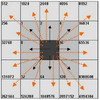
MFworks has evolved from MAPFactory, originally designed by C. Dana Tomlin, the father of map algebra. Conducting network analysis in MFworks comprises iterative steps that lead to a functioning network. These steps will convert map layers with square cells into linear elements that are linked together as lines, with directional flows assigned to each cell, and map layers containing cost variables. This tutorial, developed by husdal.com in 2002, is a showcase on network analysis in MFworks, with step by step instructions and a summary of the theory behind it.

Click here for the tutorial.

25 April 2001

Corridor Analysis - A timeline of evolutionary development

Locating a right-of-way for a linear facility such as a pipeline, a transmission line, a railway or a roadway can be a complex problem. Locating a corridor connecting an origin and a destination on a landscape is analogous to identifying a route that traverses a continuous landscape. Thus, corridor analysis is closely linked to shortest-path finding and network analysis in raster GIS, and has evolved along with it. Corridor analysis is essentially a variant of surface analysis, but can also be viewed as a site selection problem where an optimal contiguous and elongated site is sought.

Keywords: corridor analysis, network analysis, raster GIS, least-cost path

Continue reading "Corridor Analysis - A timeline of evolutionary development" »

01 September 2000

How to make a straight line square

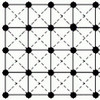
Network analysis and least cost paths have long been the dominion of vector GIS. The research of this thesis for the Msc in GIS explores the topic of network analysis in raster GIS, using MFworks as example software. Current algorithms, procedures and network modelling techniques are investigated and common artefacts are explained.

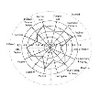
An extension of Tomlin's directional identifiers is proposed, allowing the modelling of non-planar features. Along with this, the integration of time- dependent travel cost variables is achieved through linking MFworks with an external Visual Basic application for updating the cost-of-passage surface, demonstrating that such interaction extends the inherent capabilities of a GIS engine. Another conclusion to be drawn from this paper is that network analysis in raster GIS is a variant of surface analysis.

Read the full thesis (pdf)

If you wish to cite or reference my thesis, please use the following (or similar) format: Husdal, J. (2000). How to make a straight line square. Network Analysis in Raster GIS with time-dependent cost variables. Unpublished. Thesis for the MSc in GIS at the University of Leicester, UK.

25 June 2000

Fastest path problems in dynamic transportation networks

This research essay and literature review investigates some of the gateways to path finding in static and dynamic networks that are listed in present research literature. A selected set of different approaches are highlighted and set in a broader context, illustrating the various aspects of path finding in static and dynamic networks.It is shown that the A* algorithm is the dominant algorithm for solving fastest path problems. A further attempt is made to draw attention to the advances that have been made in path finding in the field of robotics, in order to establish a lateral relation that can form the basis of further exploration and fruitful merger of the two research fields.

Continue reading "Fastest path problems in dynamic transportation networks" »

14 November 1999

Road Transportation Management using GIS - vehicle routing and tracking

Roads are main arteries of modern society’s infrastructure, contributing heavily to the distribution of goods and persons. GIS provides many helpful applications for ensuring a smooth flow, by aiding design, routing, traffic control and real-time navigation. In essence, a GIS application in transportation is maybe no longer a GIS, but a merger of GIS with Intelligent Transportation Systems or Transport Telematics, where GIS no longer exists as a stand-alone product.

Continue reading "Road Transportation Management using GIS - vehicle routing and tracking" »

Ads

  • Start a TypePad Blog Today

amazon.com