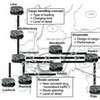
 Are “bad” locations synonymous with “bad” logistics? That is the title of my presentation at the World Conference on Transport Research, WCTR 2010, in Lisbon, Portugal, this week. Norway, unlike much of central Europe, has a very sparse transportation network with few mode options (rail, road, sea or air) and few link options within each mode. How does that impact on logistics operations and how do Norwegian freight carriers handle transportation disruptions?
More than just a supply chain
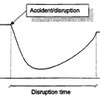
Supply chain management (SCM) often overlooks or neglects the mundane side of physical distribution and transportation, despite the fact that these activities form the backbone of SCM, says Peck (2006). The issue of supply chain disruptions is of particular importance in sparse transportation networks, because with only few transportation modes and/or links available between communities, these communities become extremely vulnerable to any disruption, since in a possible worst-case scenario no suitable alternative exists for deliveries to or from these communities. This makes supply chain disruptions in a sparse transportation networks different from disruptions a non-sparse network, since supply chains, here more than elsewhere, serve a purpose that extends beyond the immediate concerns of SCM.
Bad locations – Bad logistics
For those of you who cannot attend the WCTR, here is my presentation:
The full paper has been presented earlier, in my post on How Norwegian freight carriers handle supply chain disruptions.
WCTR 2010
This presentation will take place on July 13, 0945-1115 in session B1.1, room 0.07 at the WCTR conference.
Reference
Husdal, J. & Bråthen, S. (2010). How Norwegian freight carriers handle supply chain disruptions. Paper presented at the World Conference for Transportation Research 2010, Lisbon, Portugal, 11-15 July 2010.