2008/11/04 9:59 CET THIS and THAT

Sparse transportation networks - a nightmare for supply chains

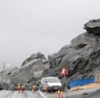
E6 Steinkjer LøsbergaNow it has happened again. Hardly a week goes by in Norway without a major supply chain disruption. Now the main (and practically only) highway beween the Northern and Southern part of Norway has been interrupted, prompting long detours on smaller roads. Not only that, the in fact only rail line between Trondheim and Bodø has been interrupted as well, a rail line that transports much of the goods between North and South Norway and is a major freight corridor. Normally, eight large freight trains pass every day. The irony is that this happened during construction work aimed at improving said road. In fact, this is the second time this year; in June the road and rail were closed for 12 days. This time, it’s looking like a couple of WEEKS!

In a previous article I contended that sparse transportation networks, like in Norway, are a recipe for supply chain disruptions. Furthermore, unlike in regions with a dense transportation network, supply chain management in a sparse network setting comes close to being business continuity management, because a well-handled supply chain disruption can translate into business continuity, while an ill-handled supply chain disruption can translate into business dis-continuity. Now, this minor incident is hardly going to cause any business dis-continuities in Norway, but, if like last time, the clear-up takes 12 days, or more, this will be a costly affair for all involved.
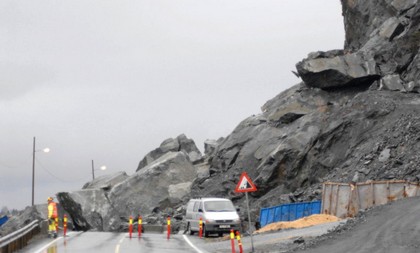
E6 Steinkjer, Norway

Transportation networks like freeways and interstate highways are the main backbone of modern society and play an important role in supply chains. Consequently then, the reliability of the transportation network or the reliability of supply chains is thus a decisive factor not only in terms of market outreach and competition, but also in terms of continuity, to ensure a 24/7 operation of the community we live in. Any threat to the reliability of the transportation network constitutes a vulnerable spot, a weakness in the supply chain. In Norway, this weakness seems to come to the surface more often than necessary.

Links

Related

More from husdal.com

  • jostein

    Such is life, and it is getting sucher every day…

    I am an outsider to the field, I never attended a single course in logistics or related professions – although on an abstract level we may draw parallels to my area, computer communications.

    A computer (or telephnone) network built on the fundamental assumption that the network infrastructure is so robust that it will never fail to serve all your needs, is BADLY designed – and that is a polite way to phrase it. Service interruptions, long and short, do occur, and you canNOT rely on a backup line always being available.

    People living in costal Norway and north of Trondheim know very well that this applies to physical transportation as well. Roads closed due to foul weather, ferries out of operation, electric power (including that which is required for safe operation of railroads) that goes out at the worst possible moment… Those are not extremely exceptional conditions – they are everyday alternatives for what might happen. You plan with them, rather than for them.

    Well, If you live in Bodø or Tromsø downtown, you may not be too worried about electricity going out for hours or days in a row, or the grocery store running out of bread and milk, but you don’t need to move that far out the towns to see kerosine lamps and stoves ready for use in most homes. The average amount of food stored at home is strongly influenced by how long you may have to make due without supplies – maybe a week, maybe more, it depends on the location.

    People who live their life in the outskirts of Norway – that covers at least the entire northern half with a few exceptional cities – will read your blog and think: You are talking about YOUR problems, not ours! In fact, WE HAVE a 24/7 society, that works well because it is designed NOT for continous and absolute reliance on “supply chains” – I quote that term because you use it in a specific sense that fits rather poorly with how the outskirts man experience his daily life. “Supply chain disruption”: So there’s no ferry today – oh, well, I’ll ask for a cup of coffee at my cousin Jens’ before I return home, maybe he knows if the ferry will run tomorrow…

    “…A decisive factor not only in terms of market outreach and competition, but also in terms of continuity…” is the language of an academic desk analysis, when you are busy filling up your kerosine lamps because a winter storm is approaching. Maybe you remember the police sergeant in Kautokeino a few years ago, with temperatures between minus 45 and minus 50, lasting for a week – he was asked on national television what would be the consequeces if the electic power broke down due to overload. “That will significantly reduce the difference between indoor and outdoor temperature” was his reply. THAT is outskirts reality, not “supply line disruptions”.

    As long as resources allow establishment of a fully redundant network of alternate paths, it makes sense to consider “market outreach and competition”. My point is that such a model simply isn’t applicable to the outskirts of Norway.

    I’ll agree that Steinkjer is far from the most desolate place in Norway – but then: There ARE alternate roads in the area – several alternatives. Passenger trains continue their operations: Passengers are carried by bus past the rock fall. Those are signs of a rather modern, developed society. I wouldn’t rely on such options being available 500 km further north! (On Saltfjellet, that is.)

    A final note: Reliability in computer systems require that functional alternatives have different “failure modes” – what brings down one solution should not bring down the backup as well. A hundred years ago, rock falls didn’t have to be that much of an interruption: Goods transport was far more based on sea transport. Nowadays, few if any seem to ever think of sea transport as a alternate/backup path – except for the people who have lived their life in the outskirts.

    When the future of the Costal Express is debated, city people sigh “That’s just a cruise ship for rich people”, outskirts people cry “That is our major contact with the rest of Norway! Don’t take it away!” (Only the outskirts stops are ever considered dropped – the stops for those who are most dependent of it!)

    The strong down-toning of sea transport as a viable alternative (and, for the northern third of the country: The downturning of all proposals to extend the raiload), as well as the basic assumption that the supply chain must stay undisrupted, are points I think need reconsideration if you are to model a transportation network suitable for Norwegian outskirts.

  • http://husdal.com husdal.com

    Jostein,
    You said that “WE HAVE a 24/7 society, that works well because it is designed NOT for continous and absolute reliance on supply chains”. Well, from a logistics standpoint, as I see it, it is not a 24/7 society and does not work well.
    You raise an interesting point though: should we really expect a 100% uptime in the the transportation system? Maybe we should not. I’ve lived in Finnmark myself and I knew what to expect. And people living in the Norwegian outback may have come to terms with that, but regardless of that the fact still remains that businesses and their customers depend on and count on goods and products being delivered on time on schedule, delays cost money, market share and reputation.
    And yes, this particular case may not be the best (or worst) example of a supply chain disruption, since at least here there are alternatives in place, making it maybe a minor rather than a major disruption.
    Norway does have a long coastline and sea transport always was and still is a major mode of transportation, unfortunately not for most of the consumer goods a modern society relies so much upon. Road transport has taken over most of that transport in Norway.
    As far as the Coastal Express (Hurtigruten) goes, I fully agree with you. It is a valuable backup that should never be dropped for the sake of cost-efficiency.
    Logistics planners often tend to think of an ideal transportation system with 100% uptime. The point I was trying to make with the post was that supply chain disruptions are the rule rather than the exception, and as much as we have come to rely upon a 24/7 society we should also be prepared to handle when it is not so 24/7. Unfortunately, most people, and most businesses in particular, do not think along these lines too often.

Share this post

Selected blog

Gold or Dust?

Selected webinar

WTG Webinar

Selected whitepaper

Zycus Supply Risk Explosion

Selected resource

Supply Chain Response Management

Selected conference

SCL Asia 2012

Selected partner

Incapsula